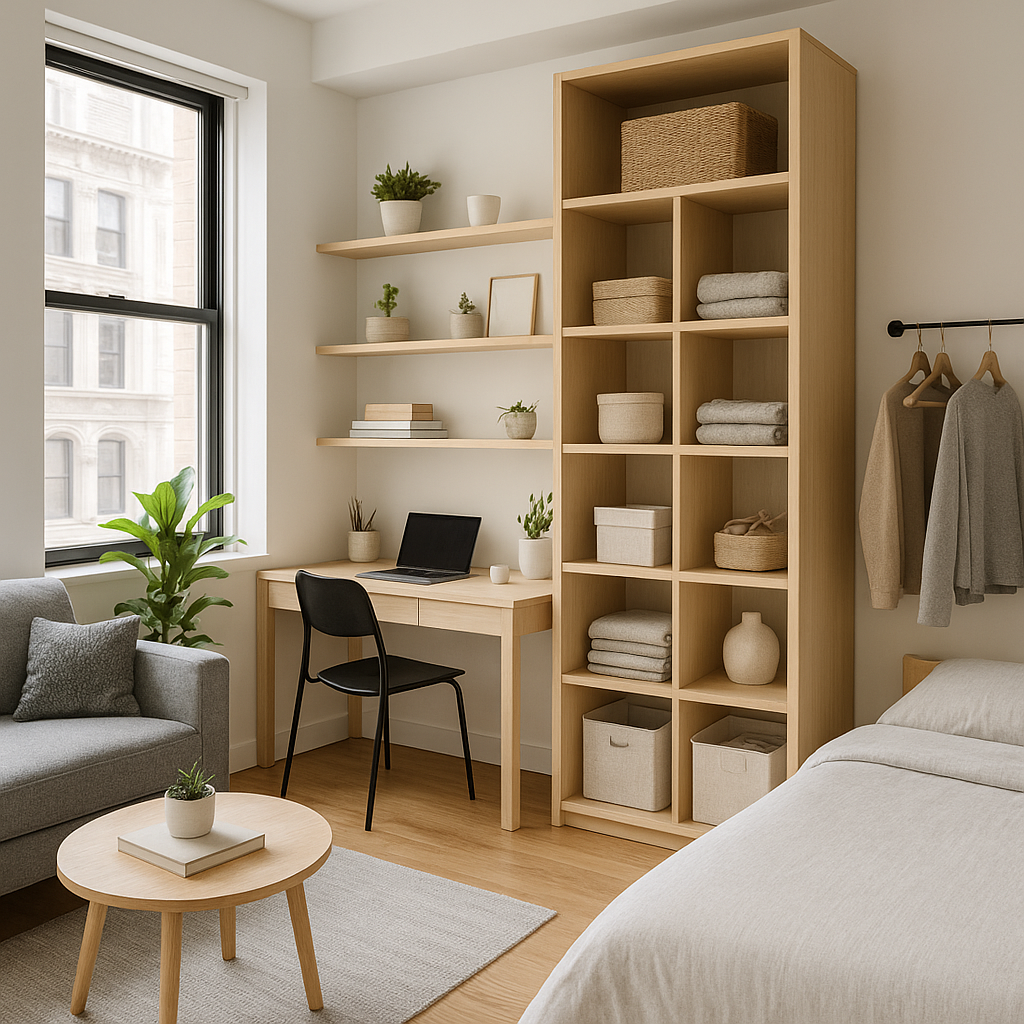
Living in a compact footprint demands clever planning. The modern urban dweller faces a constant juggling act between comfort and square footage. Studio layouts pack sleeping, cooking, and working areas into a single open room. This setup creates immediate pressure on every available corner. Finding practical studio apartment storage ideas becomes less of a hobby and more of a survival skill. Residents who crack the code early report noticeably lower stress levels and smoother daily routines.
How Studio Apartment Space Saving Ideas Evolved Over Time
Decades ago, compact living meant cramming bulky furnitre into narrow hallways and accepting permanent clutter. The approach was purely reactive. People stacked boxes under beds and shoved winter coats into kitchen cabinets. Urban planning shifts and rising real estate costs forced a complete redesign of how small homes function. Today, spatial engineering replaces makeshift stacking. Modular systems, wall-mounted racks, and hidden compartments dominate the market. The transformation mirrors a broader cultural shift toward intentional consumption and micro-living.
Understanding Core Terminology And Design Shifts
Grasping basic design vocabulary helps navigate the options without getting overwhelmed. Vertical zoning refers to using height rather than floor area for organization. Multi-functional pieces serve at least two distinct purposes, like a coffee table that doubles as a work desk or a bed frame with built-in drawers. These concepts drive modern compact housing. The old habit of buying standalone units has faded. Architects and interior planners now treat every square inch as a potential utility zone. This mindset shift separates temporary fixes from lasting solutions.
Practical Studio Apartment Storage Without Clutter
Implementing these strategies requires a mix of measurement, patience, and realistic expectations. Start by mapping traffic paths before placing any item. Clear walkways prevent the space from feeling suffocating. Next, prioritize items by frequency of use. Daily essentials stay at eye level or within arm reach. Seasonal gear moves to higher shelves or under-bed compartments. Here are proven approaches:
- Install floor-to-ceiling shelving to draw the eye upward and free up floor space.
- Use tension rods inside cabinets to create hidden dividers for cleaning supplies or pantry items.
- Swap heavy curtains for roller blinds that stack neatly above the window frame.
- Mount folding desks that disappear into the wall when not in use.
- Choose pieces with open legs to maintain visual continuity across the room.
Compact living is not about shrinking your lifestyle. It is about refining what stays and letting go of what slows you down.
| Storage Type | Space Required | Best For | Maintenance Level |
|---|---|---|---|
| Wall-Mounted Units | Minimal floor | Books, decor, light supplies | Low |
| Under-Bed Drawers | Zero extra | Seasonal clothing, linens | Medium |
| Over-Door Organizers | Vertical | Shoes, accessories, cleaning tools | Low |
| Modular Cubes | Flexible | Media, toys, office gear | Medium |
The market continues pushing boundaries with materials that weigh less but hold more. Lightweight aluminum frames, hollow-core panels, and tension-based fixtures dominate recent releases. Designers now test prototypes in actual micro-units before mass production. This real-world validation cuts down on failed products. Urban planners in major European and American cities have started updating zoning codes to accommodate these new standards. The shift proves that effcient living is no longer a niche trend but a structural necessity.
Further reading on spatial optimization can be found at Apartment Therapy’s 2026 layout guide and Dezeen’s coverage on modular design. Historical context on compact housing is archived at Source: bbc.com.
Long-Term Habits For Sustainable Organization
Success in tight quarters comes from treating the space as a living system rather than a static container. Rotate items seasonally. Label bins clearly. Keep a running inventory of what sits in every drawer. The process feels tedious at first but quickly becomes automatic. People who stick to these routines report fewer misplaced items and smoother morning schedules. The environment adapts to their habits, not the other way around. That balance is the real measure of success when working with limited square footage.